| Availability: | |
|---|---|
| Quantity: | |
TOPRISE-S-3
A Ridge Ventilator is a large-scale integrated unit that combines ventilation, smoke exhaust, and daylighting functions. Constructed from pressed color steel sheets, FRP panels, a steel structure frame, and related components, it has been widely adopted in construction projects across industries such as power, metallurgy, chemical, and shipbuilding.


A Ridge Ventilator is a large-scale integrated unit that combines ventilation, smoke exhaust, and daylighting functions. Constructed from pressed color steel sheets, FRP panels, a steel structure frame, and related components, it has been widely adopted in construction projects across industries such as power, metallurgy, chemical, and shipbuilding.

The ventilator employs a primary and secondary frame structure, both prefabricated and welded in our factory to ensure solidity and stability. The main frame is welded to the roof's base steel beam, integrating the unit as a structural part of the roof. Side panels are made from pressed color steel sheets with bent color steel for edge flashing.
The rainproof board utilizes high-quality FRP panels to ensure effective daylighting alongside its primary functions. An internal lower backing plate is installed to guide smoke exhaust and prevent the ingress of rain and snow. A dedicated gutter system within the ridge allows rainwater to flow onto the roof, effectively preventing leaks and water ingress.

The ventilator employs a primary and secondary frame structure, both prefabricated and welded in our factory to ensure solidity and stability. The main frame is welded to the roof's base steel beam, integrating the unit as a structural part of the roof. Side panels are made from pressed color steel sheets with bent color steel for edge flashing.
The rainproof board utilizes high-quality FRP panels to ensure effective daylighting alongside its primary functions. An internal lower backing plate is installed to guide smoke exhaust and prevent the ingress of rain and snow. A dedicated gutter system within the ridge allows rainwater to flow onto the roof, effectively preventing leaks and water ingress.

This product is suitable for various industrial environments. Selection can be guided by the following indoor-outdoor temperature differences and recommended air change rates:
Scenario 1: Temperature difference ≤ 5°C. Factories or warehouses without significant hot air production. Suggested air change rate: 6-10 times/hour.
Scenario 2: Temperature difference 5°C - 10°C. Factories with minor hot air or smoke production. Suggested air change rate: 10-20 times/hour.
Scenario 3: Temperature difference 10°C - 15°C. Factories with medium-to-high temperature gas or smoke production. Suggested air change rate: 20-30 times/hour.
Scenario 4: Temperature difference ≥ 15°C. Factories with significant hot air or smoke production. Suggested air change rate: 30-35 times/hour.
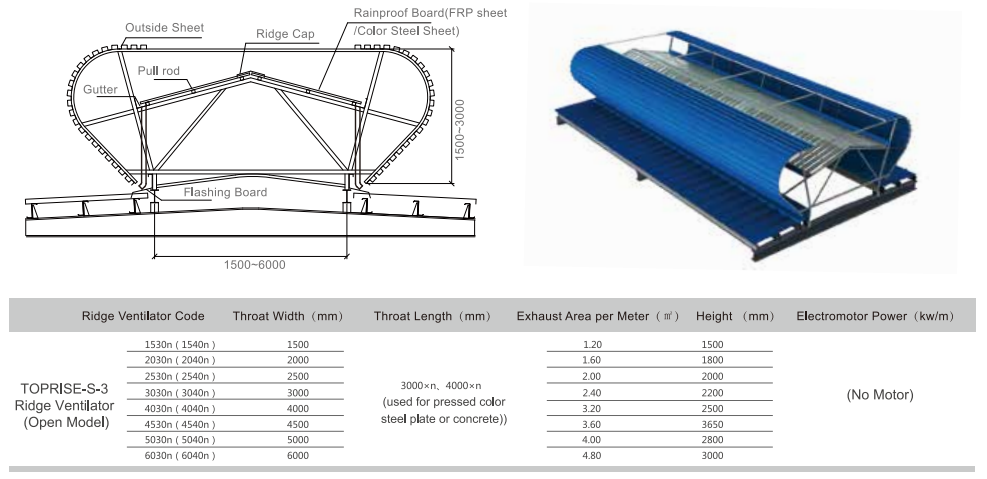
Open Model: Features a circular design on both ends for a simple structure that effectively reduces wind pressure resistance. Its internal design is rational. Suitable for warehouses, workshops, and public buildings.
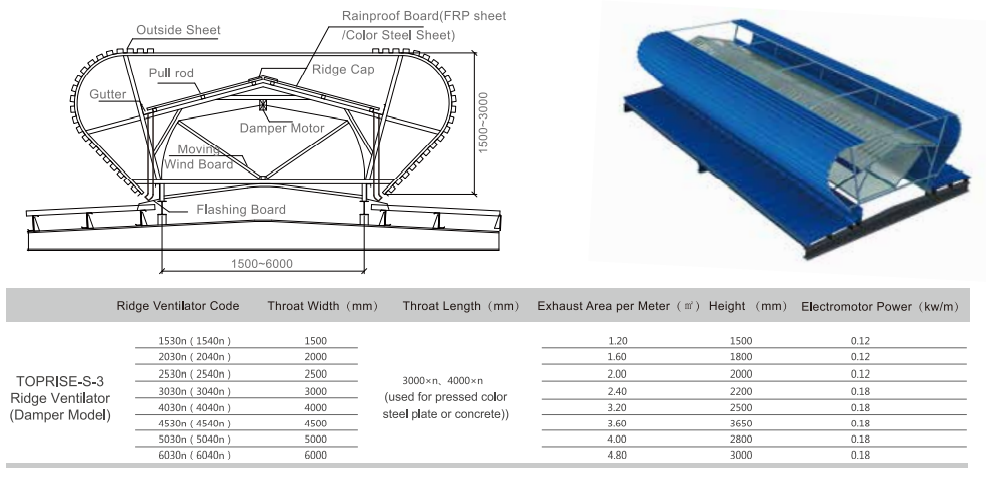
Damper Model: Incorporates all the features of the Open Model but adds an electric damper to prevent air backflow. Suitable for the same range of buildings.

This product is suitable for various industrial environments. Selection can be guided by the following indoor-outdoor temperature differences and recommended air change rates:
Scenario 1: Temperature difference ≤ 5°C. Factories or warehouses without significant hot air production. Suggested air change rate: 6-10 times/hour.
Scenario 2: Temperature difference 5°C - 10°C. Factories with minor hot air or smoke production. Suggested air change rate: 10-20 times/hour.
Scenario 3: Temperature difference 10°C - 15°C. Factories with medium-to-high temperature gas or smoke production. Suggested air change rate: 20-30 times/hour.
Scenario 4: Temperature difference ≥ 15°C. Factories with significant hot air or smoke production. Suggested air change rate: 30-35 times/hour.
Open Model: Features a circular design on both ends for a simple structure that effectively reduces wind pressure resistance. Its internal design is rational. Suitable for warehouses, workshops, and public buildings.
Damper Model: Incorporates all the features of the Open Model but adds an electric damper to prevent air backflow. Suitable for the same range of buildings.


We primarily offer the Open Type and the Electric Damper Type to meet different ventilation control needs.
Typically, units with a width greater than 1.5 meters are classified as Ridge Ventilators. Units with a width between 0.6 meters and 1.5 meters are classified as Slop Ventilators.
The product can be shipped via 40HQ containers with a maximum transportable width of 3 meters. Units wider than 3 meters cannot be shipped whole by sea and may require alternative transport methods or a split-design approach.

We primarily offer the Open Type and the Electric Damper Type to meet different ventilation control needs.
Typically, units with a width greater than 1.5 meters are classified as Ridge Ventilators. Units with a width between 0.6 meters and 1.5 meters are classified as Slop Ventilators.
The product can be shipped via 40HQ containers with a maximum transportable width of 3 meters. Units wider than 3 meters cannot be shipped whole by sea and may require alternative transport methods or a split-design approach.