
- All
- Product Name
- Product Keyword
- Product Model
- Product Summary
- Product Description
- Multi Field Search
 English
When I look at a turbine ventilator, I see a smart way to boost airflow and cut down on energy bills. I like that it uses wind power, keeps air moving, and helps prevent mold. Many models last for years, even in tough weather. I do notice some downsides. These vents depend on wind, can get noisy, and might not look great on every roof. If installed wrong, leaks can happen. I find it important to weigh these facts before making a choice.
Turbine ventilators use wind to help air move better and lower energy bills. This makes them good for the environment.
They do not need much care because they have few moving parts. This saves you time and money on fixing them.
These ventilators are quiet, so your home or business stays peaceful.
Think about how windy your area is before you install one. Turbine ventilators work best where it is windy.
You might lose heat in winter with these ventilators. Some people also do not like how they look on the roof.
When I look at a turbine ventilator, I see a clever device that uses the power of the wind. The wind spins the turbine on top of the vent. This spinning action creates a negative pressure inside the vent. As a result, stale air gets pulled out of the building. I find this design simple but very effective. I do not need electricity for it to work. The wind does all the hard work for me. I have noticed that this system works best when there is a steady breeze. Even a gentle wind can keep the turbine spinning and the air moving.
I like how this device helps improve indoor air quality. By pulling out hot, humid, or smelly air, it keeps rooms fresher. I have seen it used in places like bathrooms and kitchens, where odors and moisture build up quickly. When I use a turbine ventilator, I rely less on air conditioning. This means I save money on energy bills and help the environment at the same time.
Tip: If you want to boost airflow without raising your energy costs, a turbine ventilator is a smart choice. It works quietly and automatically, so you do not have to worry about turning it on or off.
I often recommend turbine ventilators for homes, warehouses, and small businesses. They work well on roofs where wind can reach them easily. I have seen them installed in:
Attics, to remove hot air and lower cooling costs
Bathrooms, to get rid of moisture and prevent mold
Kitchens, to clear out cooking smells and steam
Garages and workshops, to keep the air fresh and comfortable
I believe that anyone who wants better ventilation without extra energy costs should consider this option. It is a reliable solution for many buildings, especially in areas with regular wind.
I always look for ways to save money on energy bills. A turbine ventilator gives me that chance. It runs on wind power, so I do not pay for electricity to keep my home cool. When the wind blows, the ventilator spins and pulls hot air out of my attic or workspace. This keeps the inside cooler and helps my air conditioner work less. I have seen my energy bills drop after installing one. Many people ask me about the payback period. I tell them that, like other energy-saving tools, the savings add up over time. The more wind I get, the faster I see results. I like that I can enjoy a cooler space without extra costs.
I do not want to spend my weekends fixing things on my roof. That is why I love the low maintenance of a wind ventilator. It has very few moving parts, so it rarely breaks down. Most models use galvanized steel or aluminum, which means they can handle rain, sun, and even strong winds. I do not have to worry about rust or damage. Here is a quick look at the cost and durability:
Model Type | Cost Range |
|---|---|
Basic Models | $50 to $100 |
Mid-Range Models | $100 to $200 |
High-End Models | $200 and above |
I find these prices much lower than electric fans or powered systems. I also like that installation and upkeep cost less. I only need to check the ventilator once in a while to make sure it spins freely. That is it. I do not need to oil it or replace parts often. This makes it a smart choice for anyone who wants a hassle-free solution.
Tip: Choose a model made from strong materials. It will last longer and stand up to tough weather.
I enjoy peace and quiet at home. A turbine ventilator works almost silently. When the wind blows, I barely hear it spin. There are no motors or fans to make loud noises. I can relax, sleep, or work without any distractions from the roof. This is a big reason I recommend it to families and business owners. If you want better airflow without extra noise, this is the way to go.
I care about the environment. Using a turbine ventilator helps me lower my carbon footprint. It does not use electricity, so it does not add to power plant pollution. The materials, like steel and aluminum, last for years and can be recycled. I feel good knowing I am making a green choice. Plus, by cutting down on air conditioning, I use less energy overall. This helps the planet and saves me money.
Note: A wind ventilator is a simple way to make your building more eco-friendly. Every small step counts when it comes to protecting the earth.
I always remind people that a turbine ventilator depends on the wind. If the wind does not blow, the ventilator will not spin. On calm days, I notice the airflow drops a lot. This means the attic or room can get stuffy and hot. I have seen this problem in areas with little wind. If you live in a place where the breeze is weak, you may not get the results you want. I want you to know that a wind ventilator works best in windy regions. If you want steady airflow all year, you might need to look at other options.
Tip: Check the average wind speed in your area before you buy. This step helps you avoid disappointment later.
I have noticed that a turbine ventilator can let warm air escape during the winter. When it spins, it pulls air out of the attic, even if that air is warm. This can make your house lose heat faster. I have seen higher heating bills in homes with poor attic insulation. However, I also know that good insulation can help reduce this problem. Even though some heat escapes, the ventilator still helps prevent moisture damage in the attic. I believe you need to balance the risk of heat loss with the benefit of a dry, healthy attic.
Some people ask me about how a turbine ventilator looks on the roof. I understand these concerns. Here are the most common complaints I hear:
Turbine vents stand out more than other types of vents.
They do not look as smooth or modern as ridge vents.
The shape and size can make the roof look less attractive.
If you care a lot about your home's appearance, you might not like the look of a turbine ventilator. I always suggest looking at photos before you decide. Sometimes, the practical benefits outweigh the style concerns, but you should choose what feels right for you.
I have learned that a turbine ventilator does not work well everywhere. In some climates, especially where the wind is weak or where there is positive air pressure in the attic, the ventilator does not move enough air. I have seen this problem in homes where the air feels stale even with the vent spinning. In these cases, static vents or other types of exhaust systems may work better. I always recommend checking your local climate and roof design before you buy.
Note: If your attic is not sealed well, the ventilator can pull warm air from inside your house into the attic. This can make your heating or cooling system work harder. Also, if the vent is not installed level, it will not spin right and will not work as it should.
I have also heard from homeowners that installing a vent can increase air leaks in the roof. This can lower the roof's ability to keep heat in during winter and may let in moisture if not sealed properly. I always tell people to hire a skilled installer to avoid these problems.
When I look at ridge vents, I see they run along the roof’s top. They give even airflow across the whole ridge. Ridge vents blend in and are hard to notice. They do not need much care. But they work best on long, straight roofs. They also need soffit vents to work well. When the weather is calm, they do not move much air. Turbine ventilators pull air out faster when it is windy. This makes them better for homes with short or broken roofs.
Here is a quick comparison:
Feature | Ridge Vents | Turbine Vents |
|---|---|---|
Air Movement | Even, continuous exhaust across the ridge | Strong air movement in windy conditions |
Installation | Requires matching soffit intake | Effective on short or segmented ridges |
Maintenance | Minimal, occasional inspection needed | Requires regular inspection and lubrication |
Performance in Calm Winds | Limited benefit; relies on passive airflow | Performance drops significantly |
Aesthetic | Low-profile, blends in with roof | Visible on the roofline |
Pest Entry | Does not create entry points for pests | Can create entry points if not properly maintained |
Tip: Turbine ventilators work well in windy places or on tricky roofs.
Powered attic fans use electricity or solar power to move air. They pull hot air out fast, even when there is no wind. These fans cost more to buy and put in. They also raise your electric bill unless you use solar power. Here is a cost breakdown:
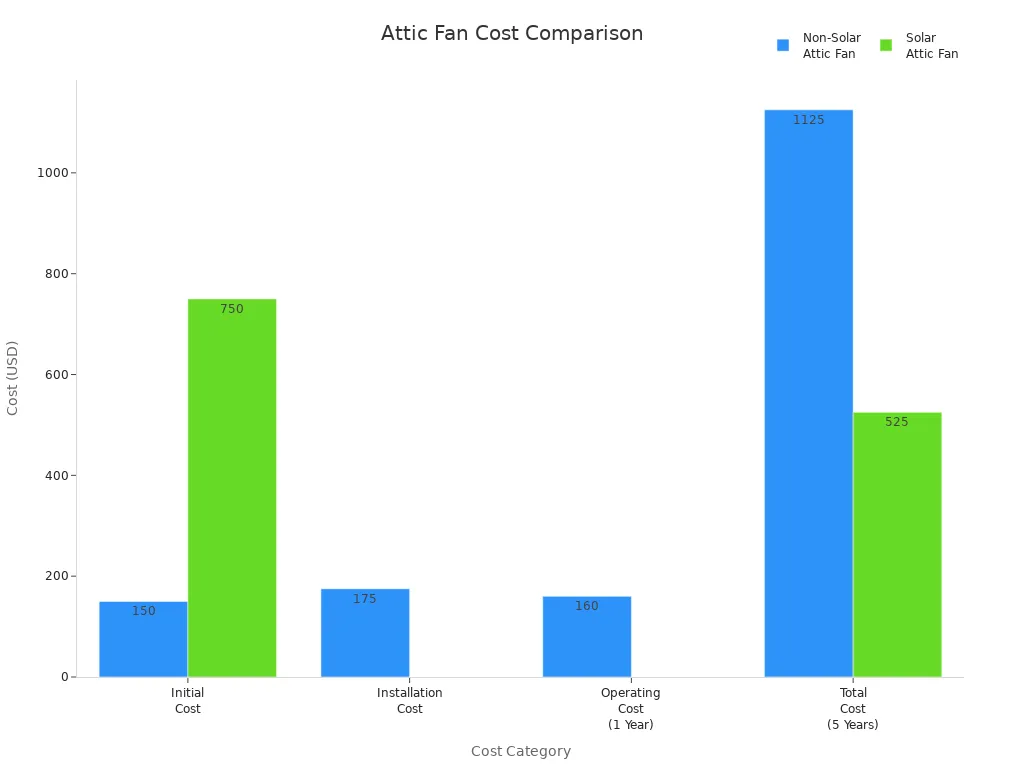
Turbine ventilators cost less and do not use extra energy. If you want something simple, powered fans may not be the best choice.
Static vents, like box or louver vents, sit on the roof. They let hot air rise out slowly on its own. These vents are simple and cheap. They do not move as much air as turbine ventilators or powered fans. They do not need wind or power, so they work all the time, but only a little. If you want slow, steady airflow, static vents can help. For faster cooling and better attic health, I like turbine ventilators more.
Note: Every house is different. Think about your roof, weather, and budget before you pick.
When I pick a turbine ventilator, I always look at a few important things. First, I check the wind in my area. If I live where breezes are steady or gusty, I know I will get the best air flow. I also look at my roof type. Some roofs work better with certain models. I want to make sure the ventilator fits well and does not leak.
I always think about safety when I install or maintain a ventilation fan. Here is my safety checklist:
Gather all tools and materials before starting.
Wear goggles, gloves, and non-slip shoes.
Make sure my ladder or scaffolding is stable.
Ask a friend to help. I never work alone on the roof.
I also compare models before I buy. I look at how much air each one moves and how efficient it is. Here is a quick table I use:
Model Type | Flow Rate (l/s) | Power Consumption (W) | Efficiency Comparison |
|---|---|---|---|
300 mm Curved Vane | Higher than 300 mm Straight Vane | 3 W | 25% larger flow rate |
300 mm Straight Vane | Lower than 300 mm Curved Vane | 3 W | Baseline |
250 mm Ventilator | 75% lower than 300 mm Curved Vane | 3 W | Baseline |
Motor-driven Turbine Ventilator | 65 l/s | 3 W | Comparable to DC fan |
Windcatcher | 40% lower at 4 m/s | N/A | Outperformed by turbine ventilators |
Wing Jetter | 40% lower at 4 m/s | N/A | Outperformed by turbine ventilators |
Tip: I always choose a model that matches my roof and climate for the best attic ventilation.
I recommend turbine ventilators for many situations. Here are the best times to use them:
Homes or buildings in areas with steady wind.
Attics that get hot and need better cooling.
Roofs that can fit a turbine without leaks.
Places where I want to lower my energy bills and help the environment.
I find that turbine ventilators work best in warm months. They pull hot air out of the attic and reduce the load on my cooling system. If I live in a place with little wind, I might look for another solution. I always check my local climate before I decide.
Note: Turbine ventilators shine in places with good wind and when I want a simple, low-cost way to boost air flow.
I think turbine ventilators are a good pick for many houses. They move air well, are simple to put in, and last a long time. But they can get blocked, face harsh weather, and might not look nice on your roof. Here’s a quick look:
Pros | Cons |
|---|---|
Moves air well | Can get blocked |
Simple to put in | Might not look nice |
Lasts in strong winds | Parts are open to weather |
I say check out different models and ask an expert before buying. You can make your home fresher and save energy today!
I choose a turbine ventilator because it runs on wind, not electricity. I save money and help the environment. An attic fan needs power and can cost more over time. I like the quiet and simple design of a turbine ventilator.
Yes, I can use both together. I install a turbine ventilator for natural airflow. I add an attic fan for extra power on hot days. This combo gives me the best ventilation. I get fresh air and lower energy bills.
I look at my climate and roof. If I have steady wind, I pick a turbine ventilator. If my attic gets very hot or I live where wind is weak, I choose an attic fan or a powered attic ventilator. I always check my needs first.
Yes, an attic fan pulls hot air out fast. I notice cooler rooms and less strain on my air conditioner. I use an attic fan when I want quick results. I see lower cooling costs and a more comfortable home.
I check my attic fan every few months. I look for dust, loose wires, or strange noises. I clean the blades and make sure it spins well. Regular checks keep my attic fan working strong and safe.
Tip: I set a reminder on my phone to check my attic fan at the start of each season.


